Vintage aviation model collecting tips
Old kits and old built models fail in predictable ways. This is what actually degrades, what can be recovered, and what to walk away from.
- Last reviewed 20/08/2026
- Guide
- Older kits and built models
- What ages worst
- Decals
- What ages well
- Polystyrene
- Store at
- 40 to 55 per cent relative humidity
- Never store in
- A loft or a garage
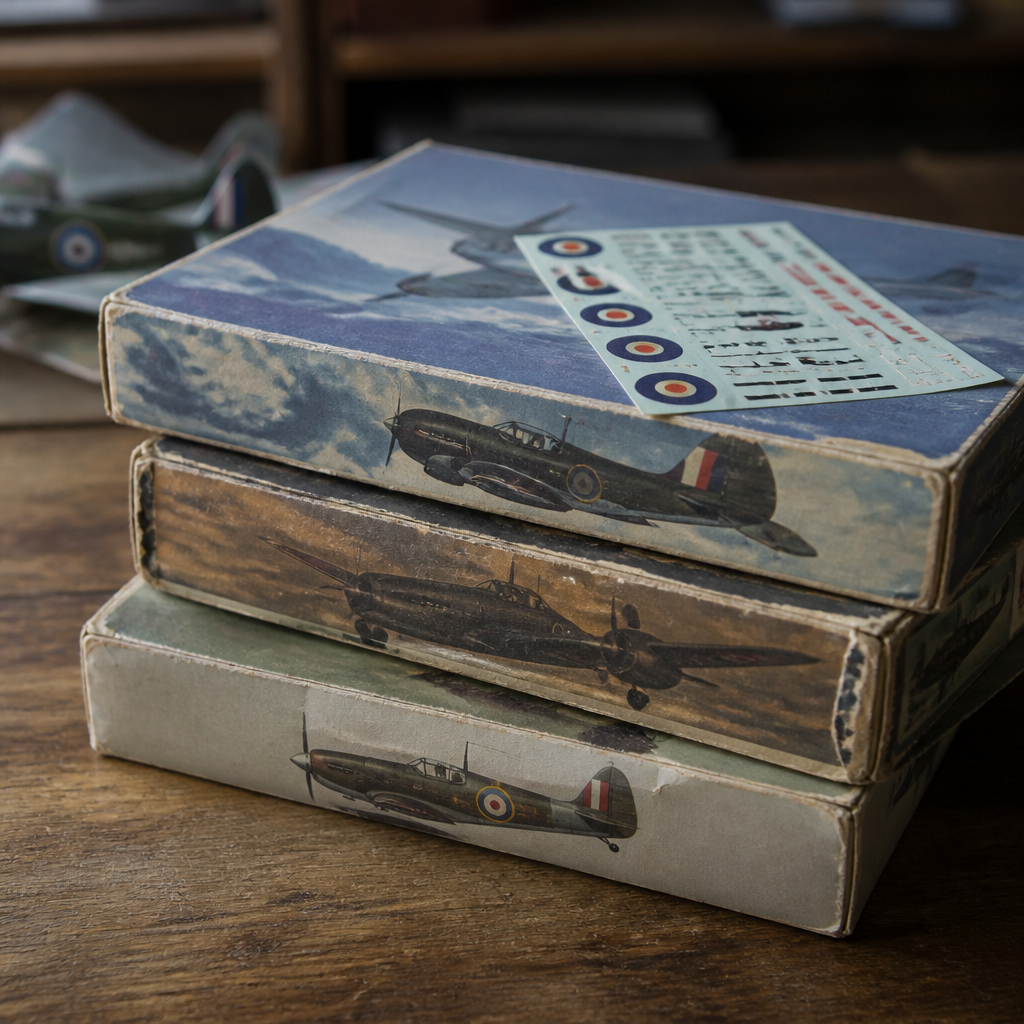
Age treats the contents of a kit box very unevenly. The plastic is usually fine after fifty years. The paper, the rubber and the decals are usually not. Knowing which is which turns a gamble into a decision.
What actually degrades in an old kit
| Part | What happens | Recoverable? |
|---|---|---|
| Decals | Carrier film yellows, adhesive fails, film cracks the moment it meets water | Often, with a coat of liquid decal film |
| Clear parts | Craze, yellow slightly, pick up fine scratches in the bag | Partly, by polishing; replacement is usually easier |
| Polystyrene | Very stable; thin trailing edges can become brittle | Yes, it builds normally |
| Rubber tyres | Harden, crack, and can stain any plastic they rest against | No, and they should be bagged separately |
| White metal parts | Can swell and crumble, sometimes called metal rot | No |
| Box | Crushes, damp-stains, fades on the side that faced the light | Cosmetic only |
| Instructions | Paper acidifies and browns, especially at the edges | Cosmetic only |
The decal rescue that works
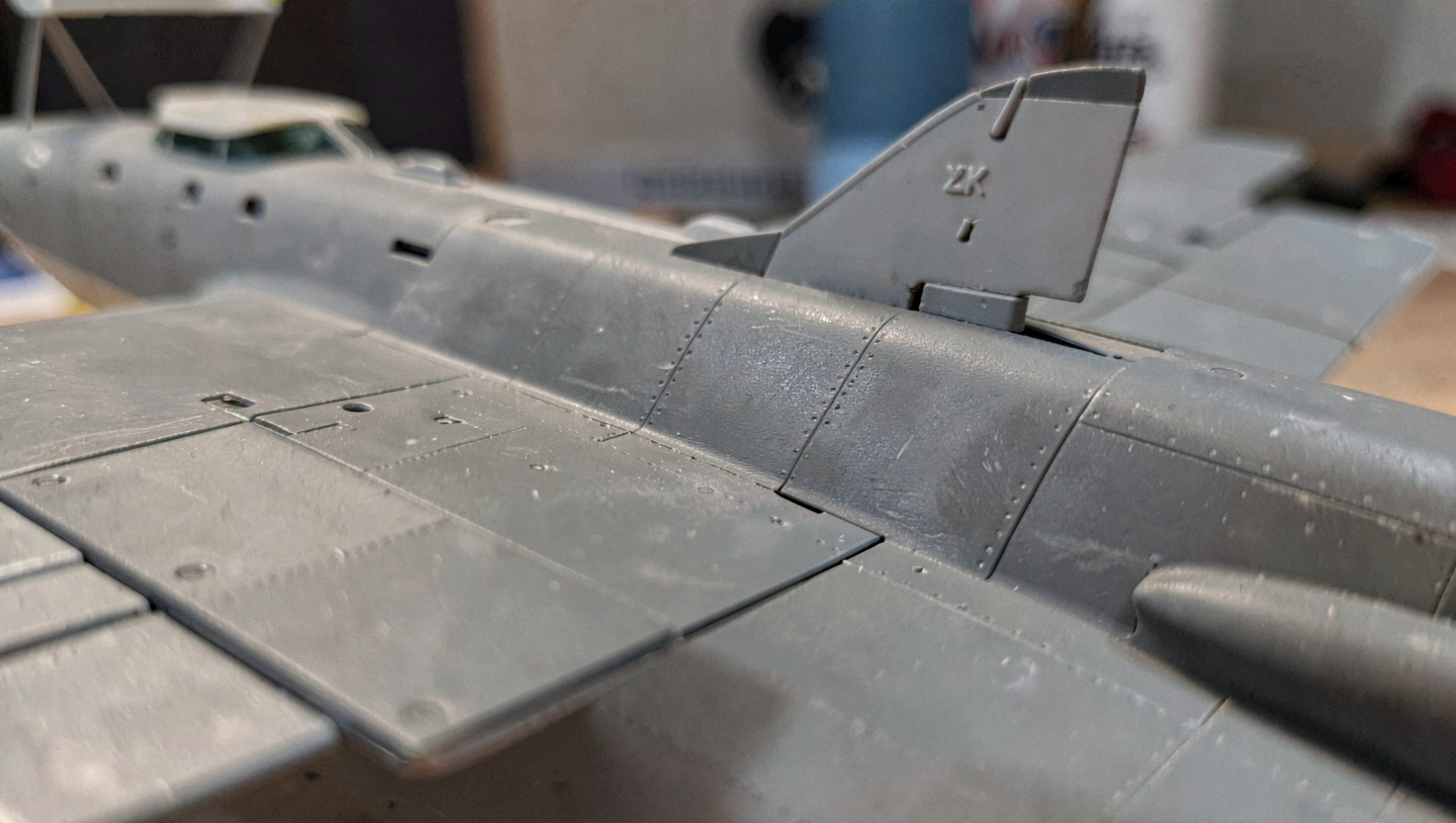
Two separate problems get confused. Yellowing is discolouration of the clear carrier film, not of the printed ink, and it commonly fades after a few days in bright indirect daylight or under a bright lamp. Cracking is the film losing flexibility, and it is fixed by brushing on a coat of liquid decal film, an acrylic sold for exactly this, which re-bonds the sheet into one flexible layer before it touches water.
Do them in that order, test on a spare stencil first, and expect the adhesive to be weak either way, so have a decal setting solution to hand. A sheet that shatters into flakes under the brush is beyond saving, and that is the point at which an aftermarket sheet is the answer.
Checking a built model before you buy it
Ask for photographs from directly in front and directly above, then look for six things:
- Glue fog under clear parts. A white haze inside a canopy is solvent damage and it is permanent.
- Repaints. Overspray on glazing, thick paint edges at panel lines, or a finish that is glossier than the era would suggest.
- Broken and reattached parts. Aerials, pitot tubes and undercarriage legs, usually reattached slightly crooked.
- Undercarriage rake. If the model squats or leans, a leg has bent or a joint has failed under weight.
- Silvering around the markings. Tells you the model was decalled onto a matt surface, and it cannot be fixed afterwards.
- Fine scratches on gloss surfaces. The signature of somebody dusting with a cloth for twenty years.
The same photograph checks, applied to bought replicas rather than built kits, are set out on the replica page.
What a sealed box really tells you
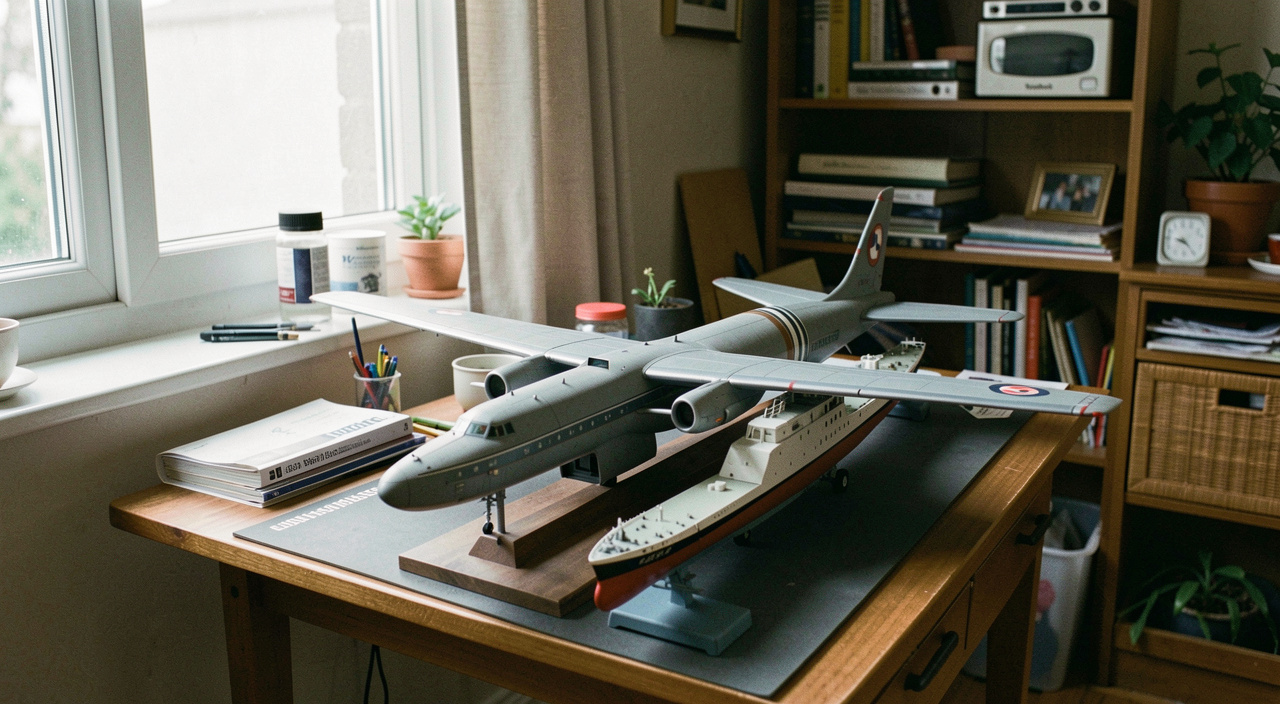
Less than people think. A factory seal says the parts are complete and the plastic has not been handled. It says nothing about the decals, because decal film ages in the dark just as well as in the light. Ask for a photograph of the decal sheet and the clear sprue before you commit, and treat a refusal as an answer.
Storage: four conditions
| Condition | Target | Why |
|---|---|---|
| Temperature | Stable room temperature | Cycling drives condensation inside sealed bags and boxes |
| Humidity | 40 to 55 per cent relative | Dry embrittles paper and rubber; damp grows mould on card |
| Light | Dark for anything stored | Box art and decal film both fade |
| Position | Flat, stacked no more than three deep | Box crush is the most common damage of all |
That rules out three popular places. A loft cycles thirty degrees between February and August. A garage is damp and shares its air with solvents. And a sealed plastic tub without desiccant traps whatever humidity was in the room on the day you closed it.
Three things to walk away from
White metal parts that have started to swell, because the process does not stop. A built model with fogged clear parts, because the fog is inside the plastic. And any kit stored in a loft or garage where the seller cannot say for how long.
Provenance is worth keeping
Keep the box, the instructions, the unused portion of the decal sheet, and a note of where the kit came from and when. For a built model, keep the build date and the kit it came from. That is the entire documentation of a collection, it costs one index card per model, and it is the difference between a collection and a pile.
An inventory that takes one evening
Photograph each model against a plain background, in the same light, from the same angle. Note scale, subject, maker, date acquired and where it lives. This is useful when you are thinning a shelf, as described on the favorites page, and it is the first thing an insurer asks for after any loss.
- Crazing
- A network of fine cracks in clear plastic, caused by solvent or by stress. Permanent.
- Metal rot
- Progressive swelling and crumbling of some cast white metal alloys. It spreads within the part and cannot be arrested.
- Liquid decal film
- A brushable acrylic that re-bonds a cracked or fragile decal sheet into a single flexible layer before use.
- Setting solution
- A mild solvent that softens a decal so it conforms over raised detail instead of bridging it.
The same logic applies to older objects with movements and cases, where condition is read in layers rather than judged at a glance. Buyers who want a repeatable method can compare notes on restoring an antique clock, which sets out how to date a movement and its case and what restoration actually involves. The checks overlap with the ones above: look for replaced parts, mismatched finishes and repairs that hide rather than solve a fault. Age alone proves nothing. What matters is what was done, when, and whether it can be undone.
Readers who want to see how the same logic applies outside the display case can look at where Halloween comes from, a guide on Samhain and carved pumpkins read through the printed imagery of the holiday. The method matches the one used here: date the object, name what time and light have done to it, and separate what can be reversed from what cannot. Yellowed decals, faded box art and worn paint reward the same patience, and the same willingness to walk away when the damage has gone past recovery.
Collectors who keep field notebooks on acquisitions follow the same habit as the painters and potters described in workshop practice on the Chesapeake, where a season is planned around tides, local clay and firing logs. The parallel is practical: record purchase date, storage temperature and humidity for each kit, note when decals were last inspected, and log repairs. A written record turns guesswork into evidence, so a yellowed sheet or a warped fuselage can be dated rather than assumed. Both pages share one method, observation over assumption, applied to different materials.
Where to go from here
- Where the rescued model goes
Case families, sizing and seals, so a fifty-year-old model does not gather the next fifty years of dust.
- The photograph checks in full
Outline, surface, markings and finish, in the order that catches the most errors before money changes hands.
- Look up an unfamiliar term
Forty-seven entries covering kits, finishing, aircraft and ship models.